About the book
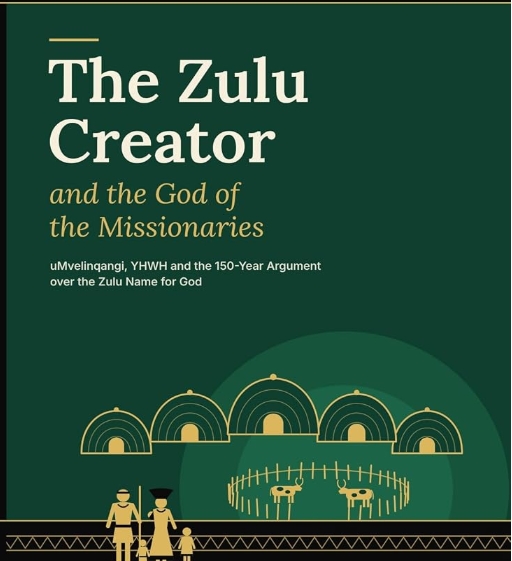
Before the missionaries chose a word for God, the Zulu already had a name for the Creator.
Open a Zulu Bible today and its first line says uNkulunkulu created the heavens and the earth. The word is Zulu. It feels like proof that the Bible speaks of the same Creator the ancestors knew. This book tests that assumption against the evidence.
For seventy years, missionaries in nineteenth-century Natal argued over what to call God in Zulu. They tried uThixo, a borrowed word. They tried uDio, adapted from Latin. They tried uJehova. They settled on uNkulunkulu—and set aside the older name, uMvelinqangi, the First-to-Appear, which did not reach a Zulu Bible until 1986.
The book sets two histories side by side: what the earliest Zulu testimony says about uMvelinqangi, drawn from named informants recorded by Henry Callaway, early dictionaries and travellers, and a little-known 1939 manuscript by the blacksmith Gidion Dhlamini, translated here in full—and how historians now trace the God of the Bible, from El and YHWH in ancient Canaan to the creeds of imperial Rome. It then follows the mission press in Natal where the two histories collided, including Bishop Colenso and the Zulu convert William Ngidi, whose question about Noah's flood changed his teacher.
The argument is careful throughout. Evidence is kept apart from interpretation. The author says plainly how thin and how late the written record is, and sets out what would change his mind. Nothing here asks a believer to stop praying. It asks the reader to know two histories that are rarely told together.
A Zulu story, with a question for every people who received their God in translation.
Who this book is for
- Zulu Christians who want to know the history behind the name they pray with
- Readers who follow the ways of the ancestors and want evidence, not romance
- Students of African religion, mission history and Bible translation
- Anyone curious about how gods are named—and what happens when a name is translated
Inside the book
- A glossary of Zulu, Hebrew and Greek terms
- A full chronology
- An account of the sources and how they were weighed
- A complete bibliography
| Title | The Zulu Creator and the God of the Missionaries |
|---|---|
| Author | Siyabonga Mbambo |
| ASIN (Amazon ID) | B0HMHXFVQR |
Get The Zulu Creator and the God of the Missionaries on Amazon
What readers say
“When the missionaries came to Africa during the early and ancient era (1st to 7th century), our forefathers already believed in God. Man could never comprehend who He is. Africans called Him uMvelinqangi, meaning He was there before all creation came to existence. We see Him in Mother Earth, nature, mountains, wind, water, the sea, the sun, the moon, the stars. His spirit lives in everything He created. uMvelinqangi is believed to be the ancient spirit that was there before the foundations of the earth, the universe. Everything was created by Him, for Him. They believed God is omniscient and omnipresent—not limited by space or distance. His presence is everywhere, and He breathed life into everything He created. No man could ever fully comprehend who He is, and His supremacy.”
— L. Khwela
Want to hear when the next book is out?
Subscribe for launch news, new essays and updates.
New books, essays and updates, straight to your inbox. No spam, and you can unsubscribe at any time. By subscribing you agree to the Privacy Policy.
Also by Siyabonga Mbambo
Nothingless
About the book